Turned Parts from Steel & Titanium
Have turned parts made from S355, 42CrMo4, free-cutting steel and titanium, from one-off parts to large series. We review your drawing and place it with a vetted partner shop that knows the material well.
Steel turned parts are usually made from structural steel (S355), quenched and tempered steel (42CrMo4) or free-cutting steel (11SMnPb30); titanium turned parts from Grade 2 or Ti6Al4V, which needs adapted cutting data, high-pressure coolant and wear-resistant tooling. Strobel Industry places such turned parts made to drawing with vetted partner shops, from 1 piece to large series. Good turning shops achieve tolerances down to IT6. Reply within 24 hours.
Steel & Titanium, Strength Meets Precision
Steel is the most widely used material in CNC machining, from structural steel S355 and free-cutting steel 11SMnPb30 to quenched and tempered steel 42CrMo4. There is a suitable grade for every application. Titanium complements the range where low weight with high strength and corrosion resistance is required.
For series, steel is machined economically on lathes with bar feeder and sub-spindle. Titanium requires adapted cutting data, high-pressure coolant and wear-resistant tools. We place your part with a partner shop that has experience with the material.
Steel & Titanium Grades Overview
Our partner shops process all common structural, quenched and tempered and free-cutting steels as well as titanium alloys. The right choice depends on strength, machinability and operating environment.
S355J2 (Structural Steel)
The standard structural steel: Good strength (355 MPa), good weldability, cost-effective. For general mechanical engineering, steel construction and structural applications.
11SMnPb30 (Free-Cutting Steel)
Optimized for machining: Lead addition guarantees short chips and high cutting speeds. The reference material for series turned parts.
42CrMo4 (Q&T Steel)
High-strength quenched & tempered steel (900 to 1,100 MPa). For highly stressed shafts, bolts and gears. Case hardening and induction hardening possible.
C45E (Q&T Steel)
Versatile quenched & tempered steel of medium strength. Good machinability and hardenability. For axles, shafts and moderately stressed components.
Ti Grade 2 (Pure Titanium)
Commercially pure titanium: Excellent corrosion resistance, biocompatible, approx. 45% lighter than steel. For medical technology, chemical and offshore.
Ti Grade 5 (Ti6Al4V)
The most widely used titanium alloy: High strength (900+ MPa) at low weight. For aerospace, motorsport and highly stressed components.
Benefits of Steel & Titanium Parts
Maximum Strength
From 355 MPa (S355) to 1,100 MPa (42CrMo4) and 900+ MPa (Ti6Al4V). For highly stressed designs.
Economical in Series
Free-cutting steel 11SMnPb30 enables short cycle times and low unit costs. Ideal for mass production.
Hardenable & Temperable
Q&T steels can be hardened after turning: case hardening, induction hardening, quenching & tempering, for wear-resistant surfaces.
Titanium: Lightweight Champion
Titanium weighs only 4.5 g/cm³ (steel: 7.85 g/cm³) with comparable strength. Weight reduction up to 40% possible.
Universally Applicable
Steel turned parts are at home in virtually every industry: mechanical engineering, automotive, energy, hydraulics, construction.
Good Availability
Standard round steels (S355, C45, 42CrMo4) are available from stock. Short procurement times and stable prices.
Your Part in 5 Steps
Send drawing
Send your drawing (STEP, PDF, DXF) with material, quantity and target date.
Review & placement
Experts from our team check the drawing and material. Within 24 hours we get back to you with the right partner shop.
Quote & approval
The partner shop prepares the quote with price and lead time. You approve it directly with the partner.
Production
The partner shop procures the material and turns your part. Titanium with high-pressure coolant and adapted cutting data.
Delivery
The partner delivers and invoices. State heat treatment, 3.1 certificate or inspection report in your enquiry.
Precision for Steel & Titanium Parts
Dimensional Tolerances from IT6
Fits like h6, f7 and H7 reliably achievable even with Q&T steels. IT5 through grinding possible.
Surfaces to Ra 0.4
Fine turning delivers high-quality surfaces. Through grinding or honing, Ra 0.1 µm is achievable.
Runout ≤ 0.01 mm
Tight positional tolerances even with hardened steel parts and difficult-to-machine titanium.
Threads to DIN
Metric threads, fine threads and pipe threads in all steel grades and titanium. Tolerance class 6H/6g.
Typical machines for Steel & Titanium
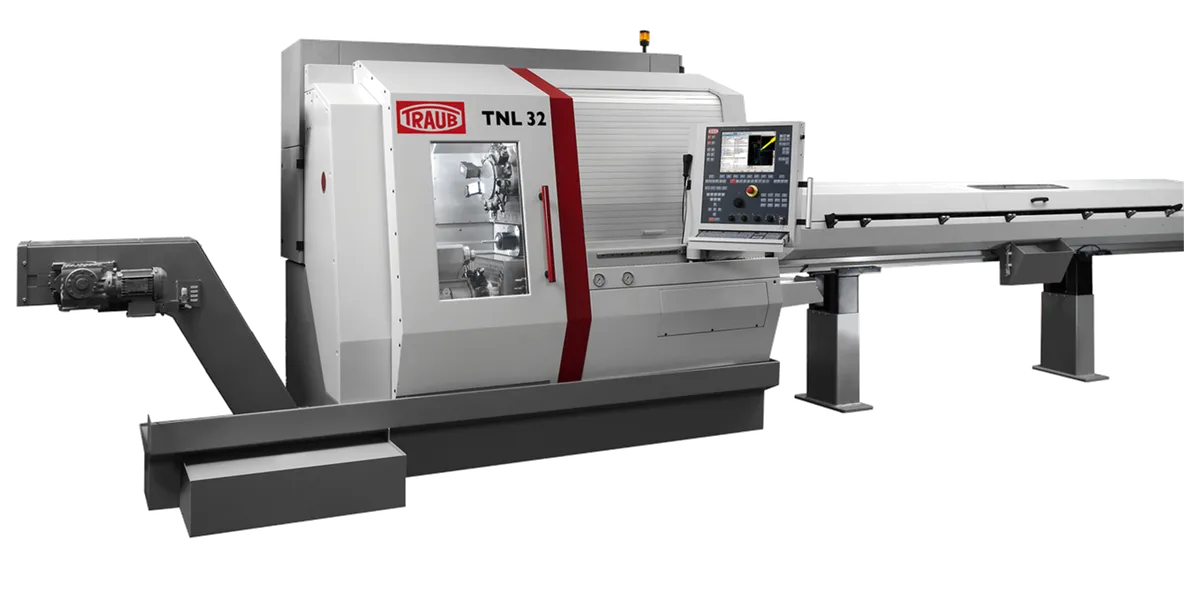
Turn-mill centre
For medium to large turned parts in steel and titanium. With Y-axis, driven tools, sub-spindle and high-pressure internal coolant for complete machining.
Sliding-head lathe
For slender parts with small diameters, such as series parts in free-cutting steel. With bar feeder for economical series.
Steel & Titanium Parts for Your Industry
Mechanical Engineering
Shafts, bolts, bushings and axles from S355 and 42CrMo4 for plants and machines.
Automotive
Free-cutting steel turned parts from 11SMnPb30 for series production in automotive supply.
Aerospace
Titanium turned parts (Ti Gr.5) for structural components, fasteners and engine parts.
Medical Technology
Biocompatible titanium turned parts (Ti Gr.2) for implants, instruments and devices.
Energy & Offshore
High-strength turned parts from 42CrMo4 and titanium for wind power, oil/gas and turbines.
Hydraulics & Pneumatics
Precision pistons, valve bodies and adapters from Q&T steel for hydraulic systems.
Questions about Steel & Titanium Parts
Q1Which steel grades are possible?
All common grades: structural steels (S355J2, S235), free-cutting steels (11SMnPb30, 11SMn30), quenched and tempered steels (42CrMo4, C45E, 34CrNiMo6), case-hardening steels (16MnCr5) and tool steels. State special grades in your enquiry and we check which partner shop processes them.
Q2Are titanium turned parts possible?
Yes. Our partner shops turn Ti Grade 2 (pure titanium) and Ti Grade 5 (Ti6Al4V). Titanium requires adapted cutting data, high-pressure coolant and special tools. We place titanium parts with shops equipped for it.
Q3What is the difference between S355 and 42CrMo4?
S355 is a structural steel with 355 MPa yield strength, affordable and good weldability. 42CrMo4 is a Q&T steel with 900 to 1,100 MPa strength after tempering, significantly stronger, but more expensive and more complex to machine.
Q4Why is free-cutting steel ideal for series parts?
11SMnPb30 contains lead and sulfur as chip breakers. This enables short chips, higher cutting speeds and up to 40% shorter cycle times than with normal structural steel, ideal for large series.
Q5Is heat treatment possible?
Yes. State quenching and tempering, case hardening, induction hardening, nitriding or hardening and tempering in your enquiry. We place the work with partner shops that supply this, in house or through their hardening shop. The heat treatment then appears as a separate item in the partner's quote.
Q6What do steel turned parts cost?
Steel is inexpensive as a material, but machining costs more than with aluminium. The unit price depends on geometry, material and quantity. Titanium is roughly 10 to 20 times more expensive than structural steel as a material. The partner shop states the price for your part in its quote.
Q7Can hardened parts be reworked?
Steel up to about 45 HRC can be turned conventionally. Harder components are hard-turned or ground. Put the hardness in your enquiry and we place it with a partner shop that offers hard turning or grinding.
Q8From what quantity are steel turned parts possible?
From 1 piece. Our partner shops turn one-off parts and prototypes from C45 or 42CrMo4 as well as large series from 11SMnPb30. We are happy to discuss beforehand which material is most economical for your quantity.
Request Steel or Titanium Turned Part
Send us your drawing with the desired material. We review it and get back to you within 24 hours with the right partner shop.
Ready for the
next step?
Send us your drawing. We review the enquiry and pass it on to a suitable, vetted partner shop, free and without obligation .