Introduction: Why Choosing the Right Manufacturing Partner Is Critical
Precision parts manufacturing is more than just producing dimensionally accurate components, it is the backbone of modern industries. From aerospace to medical technology to automotive: everywhere that components must fit together exactly, the quality of the manufacturing partner determines the success or failure of a project.
In this guide, you will learn what really matters when selecting a partner for CNC precision machining, high-precision metalworking and tolerance manufacturing, and which mistakes to avoid.
What Does Precision Mean in Modern CNC Manufacturing?
Precision in manufacturing goes far beyond simple dimensional accuracy. It is about reproducible quality, the ability to reliably, repeatably and process-safely maintain tolerances in the micrometre range. Several factors play together:
Dimensional Accuracy and Tolerances
Modern CNC machines achieve positioning accuracies of ±0.005 mm and better. But the machine alone does not create precision, only the interplay of machine, tool, material and operator know-how produces consistently precise results. More on this in our article about Factors Affecting CNC Precision.
Surface Quality
Beyond dimensions, surface finish is a decisive quality criterion. Roughness values from Ra 0.4 to Ra 3.2 are standard in precision manufacturing, for sealing surfaces or bearing fits, even finer surfaces are often required.
Form Accuracy and Geometry
Runout, parallelism, coaxiality and perpendicularity, these form and position tolerances according to ISO 1101 are just as important in precision manufacturing as pure dimensional tolerances.
Technology as the Foundation of Precision Manufacturing
Technology forms the backbone of every precision manufacturing operation. A capable manufacturing partner continuously invests in modern machines and measuring technology.
Modern CNC Machine Fleet
High-precision CNC machining centres with current controls (Siemens, FANUC, Heidenhain) form the foundation. Important features are:
- Thermal stability: Modern machines automatically compensate for temperature effects
- Direct drives: Backlash-free drive systems for maximum positioning accuracy
- Integrated probes: In-process measurement for self-regulating production
- Multi-axis machining: 5-axis simultaneous machining for complex geometries in a single setup
Measuring Technology and Quality Assurance
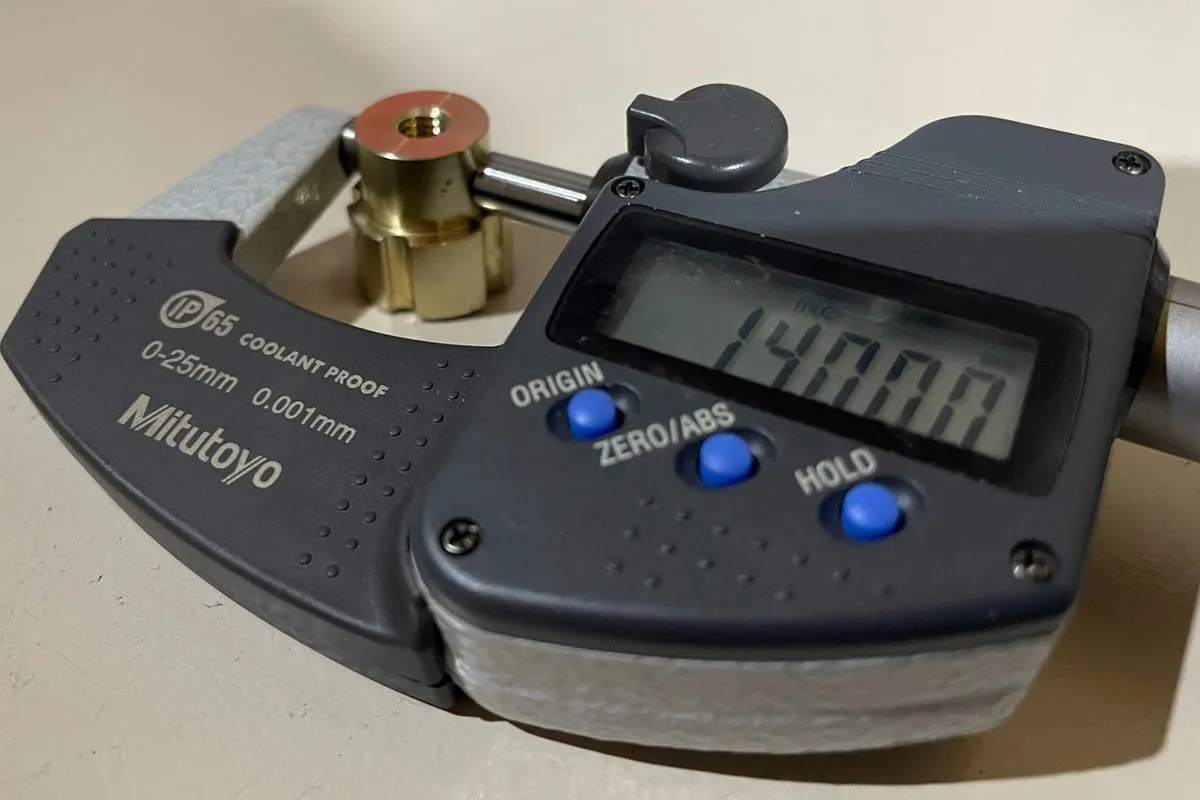
Without precise measurement, there is no precise manufacturing. A serious partner has at least:
- 3D coordinate measuring machine (CMM) for complex geometries
- Surface roughness tester to ISO 4287
- Gauge blocks and measuring instruments of accuracy class 1
- Documented measuring equipment monitoring to ISO 9001
Expertise and Material Competence
Material knowledge goes beyond the obvious. A good manufacturing partner understands how different materials behave under cutting conditions:
Typical Challenges by Material
- Aluminium: Tendency to built-up edge formation, requires adapted cutting speeds and sharp tools. Read more in our Aluminium Alloys Comparison.
- Stainless steel (1.4301, 1.4404): Prone to work hardening; requires a rigid setup and adequate feed rates to avoid re-cutting
- Titanium: Low thermal conductivity, extreme tool loading, only economically machinable with experience
- Copper/Brass: Excellently machinable, but sensitive surfaces
Checklist: How to Find the Right Manufacturing Partner
Use this checklist when evaluating potential partners for your precision parts:
Technical Equipment
- Modern machine fleet with current control technology
- Demonstrable experience with tight tolerances (reference projects, measurement reports)
- In-house measuring technology (3D CMM, roughness measurement)
- Capacity for your quantities, from CNC one-off parts to series
Processes and Organisation
- Certified quality management system (ideally ISO 9001)
- Transparent communication and short response times
- Documented processes with traceability
- Experience with your industries and materials
Partnership Collaboration
- Willingness to advise on Design for Manufacturing (DfM)
- Flexibility with changes and prototypes
- Fair and transparent pricing, see also Cost Factors in Machining
- Reliable delivery times with proactive communication on deviations
Frequently Asked Questions (FAQ)
What does precision parts manufacturing cost?
Costs depend on material, complexity, tolerances and quantity. Highly complex 5-axis milled parts with IT6 tolerances cost significantly more than simple turned parts. The partner shop states the price in its quotation. Send us your enquiry and we will pass it free of charge to one of our vetted partner shops.
How important is ISO 9001 certification?
Very important. ISO 9001 ensures that the manufacturing partner has implemented documented processes, measuring equipment monitoring and continuous improvement. It is a reliable indicator of process reliability.
From what quantity is CNC precision manufacturing worthwhile?
CNC precision manufacturing is worthwhile from quantity 1. For one-off parts and prototypes, we place your enquiry with partner shops whose processes are set up for small batch sizes. From series of 50+ pieces, unit costs drop significantly due to distributed setup costs.
Conclusion: Quality Starts with the Choice of Partner
Choosing the right manufacturing partner for precision parts is not a decision that should be based on price alone. Technical competence, material knowledge, modern measuring technology and partnership collaboration are the true quality indicators.
Looking for a reliable partner for your precision parts? Contact Strobel Industry. We review your drawing and get back to you within 24 hours with the right partner shop.